
Anúncios
Hidden cameras pose a growing threat to privacy in hotels, rentals, changing rooms, and even workplaces, making detection apps essential tools for personal security.
The advancement of surveillance technology has made hidden cameras smaller, cheaper, and harder to detect with the naked eye. These devices can be concealed in everyday objects like smoke detectors, alarm clocks, picture frames, and even electrical outlets. Whether you’re traveling, renting accommodation through platforms like Airbnb, or simply concerned about privacy in public spaces, having a reliable detection method has become increasingly important.
Anúncios
Fortunately, smartphone technology has evolved to offer practical solutions. Specialized applications now leverage your phone’s built-in sensors and capabilities to identify suspicious devices. These apps use various detection methods including infrared scanning, electromagnetic field analysis, and network monitoring to uncover hidden surveillance equipment. Understanding how these tools work and which ones deliver real results can make the difference between feeling vulnerable and taking control of your privacy.
🔍 Understanding How Hidden Camera Detection Apps Work
Detection applications employ multiple technologies to identify concealed cameras. The most effective apps combine several detection methods rather than relying on a single approach. This multi-layered strategy increases accuracy and reduces false positives.
Anúncios
Infrared detection represents one of the most reliable methods. Most hidden cameras use infrared LEDs for night vision capabilities. These LEDs emit light invisible to the human eye but detectable by smartphone cameras. Detection apps guide users to scan rooms in darkness while viewing their phone screen, where infrared sources appear as bright spots or glowing areas.
Magnetic field detection utilizes your phone’s magnetometer to identify electromagnetic emissions. Electronic devices, including hidden cameras, generate electromagnetic fields during operation. When you move your phone around a room, the app monitors fluctuations in the magnetic field, alerting you to anomalies that might indicate surveillance equipment.
Network scanning identifies devices connected to local Wi-Fi networks. Many modern hidden cameras transmit footage wirelessly. Detection apps scan the network for suspicious devices, revealing cameras that might otherwise remain invisible. This method proves particularly effective against IP cameras and smart surveillance devices.
📲 Top Features to Look for in Detection Applications
Not all camera detection apps deliver equal performance. Understanding essential features helps you choose applications that provide genuine security rather than false confidence.
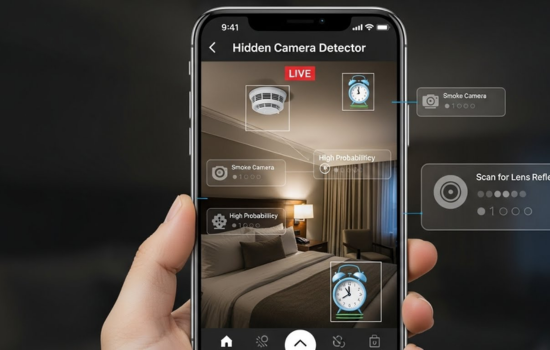
Real-time scanning capabilities allow continuous monitoring as you move through a space. The best apps provide visual and audio feedback immediately when detecting potential threats, enabling quick identification without requiring technical expertise.
Lens detection technology uses your phone’s camera and flashlight to identify camera lenses through light reflection. When light hits a camera lens at the right angle, it produces a distinctive glint. Advanced apps help users systematically scan rooms to catch these reflections.
Device identification features go beyond simple detection by attempting to classify discovered devices. This helps distinguish between legitimate electronics like routers or smart home devices and actual surveillance equipment.
Tutorial and guidance systems prove invaluable for first-time users. Effective apps include step-by-step instructions, demonstration videos, and tips for thorough room sweeps, ensuring users maximize detection potential.
🛠️ Practical Steps for Using Detection Apps Effectively
Simply installing an app doesn’t guarantee results. Proper usage technique significantly impacts detection success rates.
Begin by darkening the room completely. Close curtains, turn off lights, and eliminate external light sources. This creates optimal conditions for infrared detection, making hidden camera LEDs more visible through your phone’s camera.
Conduct systematic scans rather than random sweeps. Start from one corner and methodically work across walls, focusing on areas where cameras are commonly hidden: smoke detectors, air vents, electrical outlets, decorative objects, mirrors, and electronic devices.
Move slowly during electromagnetic field scans. Quick movements can cause false readings. Hold your phone steady for several seconds when the app indicates anomalies, allowing the sensor to provide accurate measurements.
Perform network scans upon arrival in any new space. Before unpacking or settling in, check the Wi-Fi network for unknown devices. Document the results to compare against later scans, helping identify devices added after your arrival.
🏨 Common Locations Where Hidden Cameras Are Found
Knowing where to focus your detection efforts increases the likelihood of discovering concealed surveillance devices.
Bedrooms and bathrooms represent primary concern areas. Cameras in these private spaces constitute serious privacy violations. Check alarm clocks, tissue boxes, air fresheners, towel hooks, shower caddies, and any object with a clear view of the bed or bathroom facilities.
Living areas and common spaces also warrant attention. Cameras might monitor conversations or observe comings and goings. Examine smoke detectors, wall decorations, books on shelves, television areas, and plants that provide convenient concealment.
Changing rooms and fitting areas in retail environments have seen numerous hidden camera discoveries. While businesses should maintain security, concealed cameras in these spaces cross ethical and legal boundaries. Pay attention to hooks, mirrors, and any fixtures positioned at unusual angles.
Vacation rentals and hotel rooms present unique challenges since you have no control over the space. Focus on areas with direct views of beds, bathrooms, and areas where you might change clothes or have private conversations.
⚖️ Legal Considerations and Privacy Rights
Understanding the legal landscape surrounding hidden cameras helps you know your rights and appropriate responses upon discovery.
Laws vary significantly by jurisdiction, but most places prohibit recording in areas where people have reasonable privacy expectations. Bedrooms, bathrooms, changing rooms, and similar spaces typically receive strong legal protection.
Even in private property, owners generally cannot record guests in private areas without explicit consent. Some jurisdictions require notification of any surveillance, regardless of location. Landlords and property owners face serious legal consequences for unauthorized surveillance.
If you discover a hidden camera, document everything without touching the device. Take photographs, note the exact location, and preserve evidence. Contact local law enforcement rather than confronting the property owner directly, as hidden surveillance often violates criminal statutes.
Consider legal consultation if you’ve been recorded without consent. Privacy violations can result in civil liability, providing grounds for lawsuits seeking damages for the intrusion.
🔬 Technology Limitations and False Positives
Detection apps provide valuable tools but aren’t infallible. Understanding their limitations prevents overreliance and helps interpret results accurately.
Smartphone sensors have physical limitations. Magnetometers detect electromagnetic fields but can’t always distinguish between cameras and other electronics. Infrared detection works only on cameras with IR capabilities, missing devices without night vision features.
Environmental factors affect accuracy. Metal structures, electrical wiring, and other electronics create electromagnetic interference that triggers false positives. Learning to distinguish between normal background readings and genuine threats requires practice.
Sophisticated surveillance equipment specifically designed to avoid detection can evade app-based methods. Professional-grade spy cameras might use shielding to minimize electromagnetic signatures or operate without infrared capabilities.
Network scanning only identifies wireless cameras. Wired cameras or devices recording to local storage without network connectivity remain invisible to this detection method.
🛡️ Combining Apps with Physical Inspection Techniques
Maximum security comes from combining technological detection with traditional physical inspection methods.
Visual inspection remains fundamental. Look for objects that seem out of place, devices positioned to view private areas, or items that appear to have been recently added or repositioned. Small holes in walls, ceilings, or decorative items might conceal camera lenses.
Physical examination of suspicious objects can reveal hidden cameras. Gently inspect smoke detectors, clocks, and similar devices for unusual features like small lenses, unexpected weight, or components that don’t match the device’s supposed function.
Listening for unusual sounds helps identify active recording devices. Some cameras produce faint electronic hums or clicking sounds during operation, particularly when using mechanical components like pan-tilt mechanisms.
Flashlight inspection complements app-based lens detection. Shine a bright flashlight around the room while observing for unusual reflections. Camera lenses produce distinctive glints when light hits them at the right angle.
💡 Additional Privacy Protection Strategies
Detection apps form one component of comprehensive privacy protection. Implementing additional strategies creates multiple layers of security.
Research accommodations before booking. Read reviews specifically mentioning privacy concerns or hidden camera discoveries. Properties with previous incidents should raise red flags regardless of how issues were supposedly resolved.
Use physical covers for known cameras. If you identify a device you can’t remove (like a smart TV with a camera), cover it with tape or cloth during private activities. This provides immediate protection while you determine next steps.
Request room changes if you feel uncomfortable. Hotels and rental platforms typically accommodate such requests, especially when you express legitimate security concerns. Don’t hesitate to advocate for your privacy.
Consider portable privacy devices for frequent travelers. Physical camera lens finders, RF detectors, and other specialized equipment offer detection capabilities beyond smartphone apps, though at higher cost and with less convenience.
📊 Evaluating App Effectiveness and Reviews
Choosing effective detection apps requires careful evaluation beyond simply downloading highly-rated options.
Read detailed reviews from users who describe actual detection experiences rather than general impressions. Accounts of successfully identifying real hidden cameras provide better validation than vague positive feedback.
Test apps in controlled environments before relying on them. Set up a known camera and verify whether the app successfully detects it. This practical testing reveals whether an app delivers on its promises.
Compare multiple apps to understand different strengths. Some excel at network scanning while others provide better infrared detection. Using complementary apps together increases overall detection effectiveness.
Update apps regularly to ensure you have the latest detection algorithms and compatibility with current surveillance technology. Developers continuously improve detection methods as camera technology evolves.
🌐 The Future of Privacy Protection Technology
Detection technology continues advancing as surveillance equipment becomes increasingly sophisticated.
Artificial intelligence integration promises improved accuracy. Machine learning algorithms can better distinguish between legitimate devices and surveillance equipment, reducing false positives while increasing detection rates.
Augmented reality features may soon guide users through detection processes with visual overlays, highlighting suspicious areas and providing real-time analysis directly through the phone’s camera view.
Collaborative databases could allow users to report hidden camera discoveries, creating crowdsourced intelligence about properties with privacy concerns. Such systems would help travelers make informed decisions about accommodations.
Regulatory pressure may eventually require disclosure of all recording devices, with standardized signals that detection apps can easily identify. Such transparency would shift the burden from individuals trying to protect privacy to those doing the recording.
🎯 Taking Control of Your Personal Privacy
Hidden camera detection apps represent practical tools for protecting privacy in an increasingly surveilled world. While no single method provides absolute certainty, combining technological detection with awareness and physical inspection creates robust protection.
The most important step is taking action rather than hoping privacy violations won’t affect you. Download detection apps before you need them, familiarize yourself with their operation, and make privacy sweeps routine practice when entering new spaces.
Remember that privacy represents a fundamental right worth protecting. Don’t feel paranoid or excessive for taking reasonable precautions. In a world where surveillance technology is accessible and affordable, vigilance has become necessary rather than optional.
Stay informed about emerging privacy threats and evolving detection methods. Technology changes rapidly, and maintaining effective privacy protection requires ongoing education and adaptation. Your commitment to privacy not only protects you but also signals to would-be violators that surveillance without consent carries real consequences.
By combining smartphone detection apps with awareness, physical inspection, and knowledge of your legal rights, you create multiple barriers against unauthorized surveillance. This layered approach provides the best defense available, allowing you to reclaim confidence in your personal privacy wherever you go.
